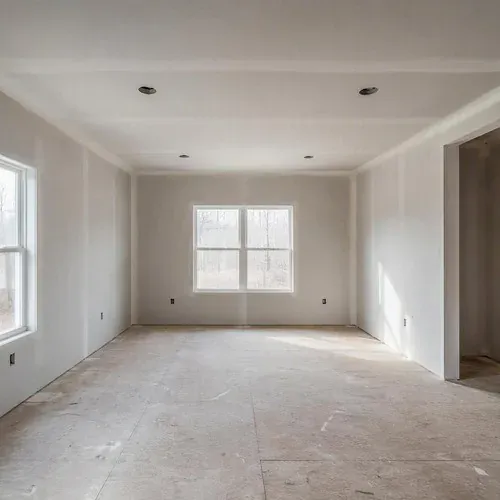
Residential Drywall Installation
New builds, basement finishing, additions and garage conversions. Board hung, taped and finished to Level 4 or Level 5.
Residential Drywall Installation ›
St Catharines Elite Drywall provides drywall taping, mudding, sanding and finishing across the Niagara Region for builders, renovation contractors and homeowners who have hung their own board. Embedding tape in the first coat, fill coat and feathering, skim coat and final sanding, plus corners, angles and bead treatment, finished to Level 3, Level 4 or Level 5 depending on what the room actually needs.
Finish levels are where most quotes go vague. Level 4 is three coats over embedded tape and it suits flat and eggshell paint in the large majority of rooms. Level 5 adds a full skim coat across the whole surface and earns its cost only with gloss paint, long uninterrupted walls, or strong raking light from big windows. We will tell you plainly when it is money you will not see.
Taping is the skilled half of a drywall job and the only half anyone sees once the paint is on. More than twenty years, over 1,500 completed jobs, fully insured and WSIB covered.
Hanging board is straightforward work. Almost anyone can be shown how in an afternoon.
Taping is the part that takes years to do well, and it is the only part of a drywall job anyone ever sees. Once the paint is on, nobody is looking at your fastener pattern. They are looking at whether the seams disappear.
Bad taping does not hide. It shows up as ridges under a low winter sun, as visible bands where the joints run, as a corner that is not quite straight, and as tape lines that ghost through the paint a year later.
None of it gets better on its own, and fixing it after paint costs far more than doing it properly the first time.
This is what we have specialised in for over twenty years and across more than 1,500 jobs. Not renovation generally. This.
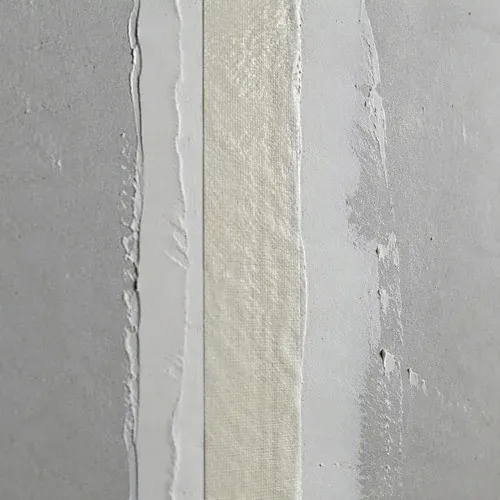
Compound goes on, tape is bedded into it, and the excess is pulled tight. The tape has to sit in the compound, not on top of it, or it will lift later. Get this wrong and no amount of subsequent coats saves the joint.
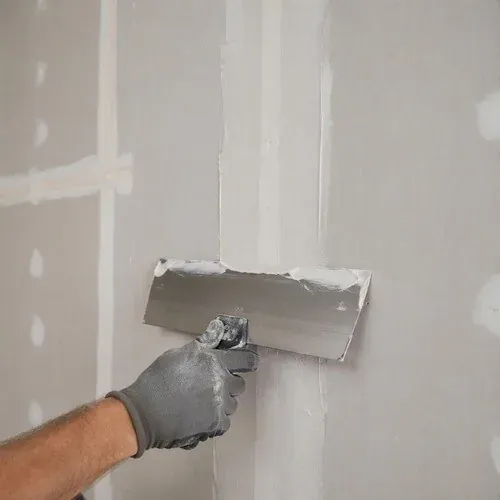
The second coat fills the recess and widens the joint. Each pass uses a wider knife than the last, because the goal is not to fill a line but to spread the transition across enough distance that the eye cannot detect it.
The third coat is thin and wide. Then sanding, checked under raking light, because a ceiling or wall that looks flat under overhead light can look completely different when light crosses it at a low angle.
Inside corners need to be crisp and straight, which is harder than it sounds over a long run. Outside corners get bead fitted and finished. Off-angle corners, cathedral ceilings and vaulted transitions all take their own approach.
Contractors throw these numbers around as if everyone knows them. Most homeowners do not, and the difference costs real money.
Outside those cases, Level 5 is money spent on something you will not be able to see. We say so. A finished basement rec room does not need a skim coat, and we would rather tell you that than quote it.
More detail on our drywall finish levels reference.
Two coats over embedded tape. Only appropriate where a heavy texture or a thick coating is going over the top. Not suitable for a painted wall you will look at.
Tape embedded plus three coats, sanded between. This is the right finish for the large majority of rooms: bedrooms, hallways, living rooms, finished basements, anywhere you are using flat, matte or eggshell paint.
If someone is quoting you a house and has not specified a level, they mean Level 4.
Level 5 adds a thin skim coat across the whole surface, not just the joints. It is the right call in three specific situations:
If you are running the project, what you are buying is predictability.
Consistency across units matters more than brilliance on any single one. Twenty apartments finished to slightly different standards produces a deficiency list, and the deficiency list is what costs you.
We work behind hanging crews regularly, hold the dates we commit to, and handle our own callbacks without an argument. On repeat work across a development we will keep the same crew on it, because that is what keeps the standard even.
This is common and completely welcome.
Plenty of capable people hang their own drywall during a basement or garage project, get to the taping stage, and realise it is a different skill entirely. Coming to that conclusion before you ruin the job is good judgement, not failure.
What we need from you before we start:
If some of that is not quite right, tell us and we will look. Most of it is fixable. It is better to know at the quote than for us to find it once we have started.
Renovations and additions almost always involve new finishing meeting an old surface.
A straight butt between new and old rarely disappears on its own, because the two surfaces are seldom in exactly the same plane and the old wall has aged. The fix is feathering the transition out much further than you would on a normal joint.
Where the existing wall is genuinely uneven, the better answer is often skim coating the full surface. It costs more, and it is the only way to get a consistent plane across the whole room rather than a good new wall next to a visibly older one.
send us the drawings or the unit count and your target dates. We will come back with a scope and a schedule.
send a few photos of the work. We will tell you honestly what we are looking at and what it will cost to finish.
A few stages from recent work. Every job ends with a raking-light inspection before we call it finished.
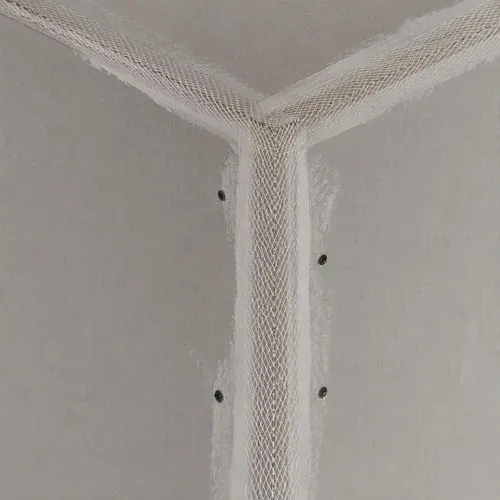
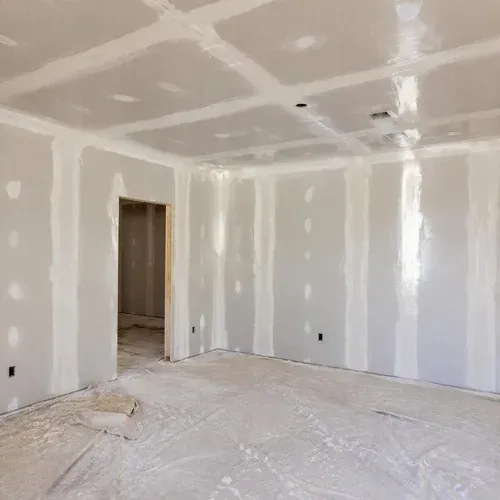
Level 4 is three coats over embedded tape, finished at the joints and fasteners. Level 5 adds a skim coat over the entire surface. Level 4 suits flat and eggshell paint in most rooms. Level 5 is for gloss paint, large uninterrupted walls, or strong raking light.
Three as standard for Level 4, four including the full skim for Level 5. Each coat gets sanded before the next.
Roughly 24 hours per coat in normal conditions. Cold or humid spaces take longer. This is why a taping job cannot be compressed the way hanging can, and why a three-day promise on a full house is not realistic.
Yes, regularly. We will check the fastening and the gaps before quoting so there are no surprises once we start.
We do. Sanding is part of the finish, not a separate chore, and the quality of the sanding largely determines the quality of the result.
Usually tape that was not properly bedded in the first coat, or a joint that was filled rather than feathered wide enough. Occasionally it is a sheen difference where a repair was spot-painted instead of the wall being coated corner to corner.
New builds, basement finishing, additions and garage conversions. Board hung, taped and finished to Level 4 or Level 5.
Residential Drywall Installation ›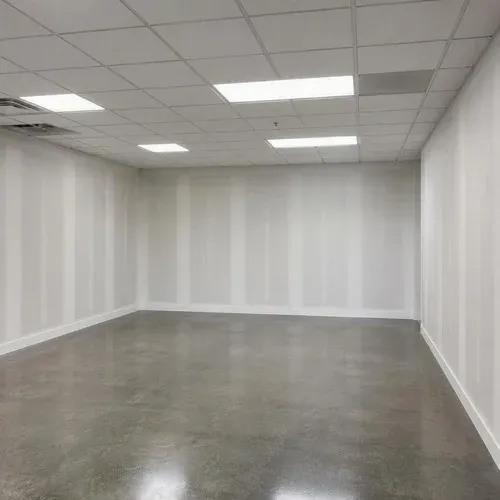
Steel stud partitions, retail and office fit-outs, fire-rated and acoustic assemblies, worked around your trades and your schedule.
Commercial Drywall Installation ›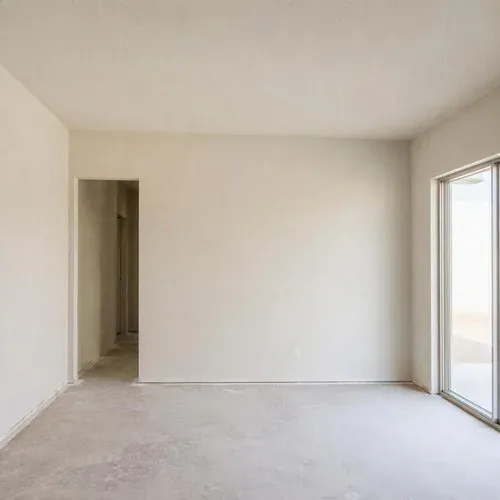
Knockdown, orange peel, swirl and stipple matched across a patch so the repaired area reads as original.
Textured Ceiling & Wall Repairs ›We cover every town in Niagara from our shop on Vine Street in St. Catharines. These are the areas where this service comes up most.
Tell us what you are dealing with and roughly where in Niagara you are. For repairs, a photo is usually enough for a number without a site visit.