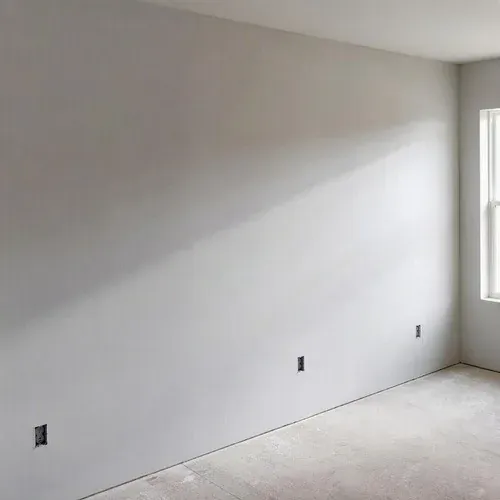
Drywall Taping & Finishing
Taping, mudding and sanding to Level 3, 4 or 5. The half of the job everyone can see once the paint is on.
Drywall Taping & Finishing ›
St Catharines Elite Drywall installs drywall for homes across the Niagara Region, from new builds and basement finishing in St. Catharines and Thorold to additions, garage conversions and full renovations in Niagara Falls, Welland and Grimsby. We hang gypsum board on walls and ceilings, fit corner bead, then tape, mud and sand to a Level 4 or Level 5 paint-ready finish. Homeowners, builders and general contractors all hire us for the same reason: drywall is the only trade we do.
Our crews work with 1/2" board on standard walls, 5/8" on ceilings where sag resistance matters, moisture-resistant board in bathrooms and laundry rooms, and cement board behind tile in wet areas. We coordinate insulation and vapour barrier, detail bulkheads around ductwork and beams, and check every surface under raking work lights before calling a job finished.
More than twenty years and over 1,500 completed jobs across Niagara. Fully insured with $2M liability, WSIB covered, WHMIS and Working at Heights certified.
Most people call us at one of three moments. The framing is up and inspected on a new build. A basement has sat empty for years and it is finally time. Or an addition is closed in and needs boarding before the painter can start.
All three end in the same place: smooth, solid walls that are ready for primer. Getting there properly is what we have done across Niagara for more than twenty years.
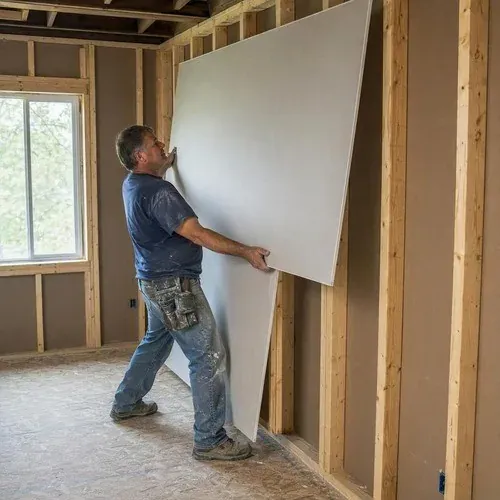
If you have never hired a drywall crew before, the scope is worth spelling out. We supply and deliver the board, hang it on your walls and ceilings, install corner bead at every outside corner, then tape, mud and sand until the surface is flat and paint-ready.
That last part is the half that most people underestimate. Hanging board is fast. Finishing it well is slow, and it is the only part anyone can see once the paint goes on.
We do not paint. We leave you a surface your painter can prime the same day they arrive.
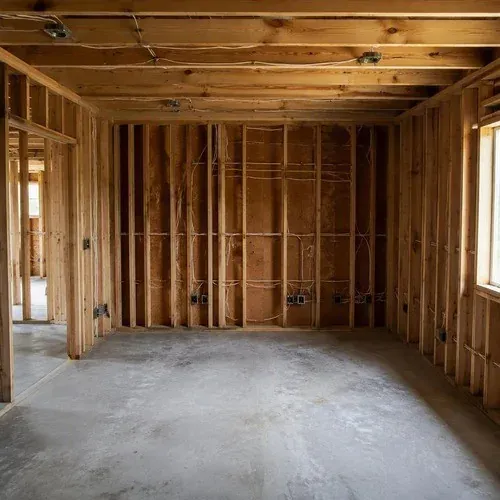
We use 1/2" board on standard walls and 5/8" on ceilings, where the extra thickness resists sagging between joists over time. Moisture-resistant board goes in bathrooms, laundry rooms and anywhere humidity sits. Cement board goes behind tile in showers and tub surrounds, because standard board does not belong there no matter what it costs to swap.
Fastening matters more than people expect. Screws set too deep tear the paper facing and lose their holding power, and screws left proud show through the finish coat later as visible pops.
Every outside corner gets a bead fitted and fastened properly rather than bedded in mud and hoped for. Bullnose, square or archway bead depends on the look you are after and what the rest of the house already has.
Three coats is the standard, with drying time between each one. The first coat embeds the tape, the second fills and widens the joint, and the third feathers it out so the seam disappears under paint.
Before we call a job finished we run work lights across every wall at a low angle. Raking light shows every ridge, every missed screw and every seam that needs one more pass. It is the difference between a wall that looks fine at handover and one that still looks fine in June when the afternoon sun comes through the window.
This is the question that costs homeowners the most money when it is answered badly, so here is the plain version.
Level 4 is tape embedded in compound, plus three coats with sanding between. It suits flat, matte and eggshell paint, which is what the large majority of Niagara homes use. Bedrooms, hallways, family rooms and finished basements are all Level 4 work.
Level 5 adds a full skim coat across the entire surface, not just the joints. It matters in three situations: gloss or semi-gloss paint, very large uninterrupted wall runs, and rooms where strong side light rakes across a wall from a big window.
Outside those situations, Level 5 is money you will not see. We will tell you that on site rather than quote it and stay quiet. A contractor who upsells you a skim coat for a basement rec room is not doing you a favour.
Basements are the single most common residential drywall job in this region, and they are not just a smaller version of upstairs work.
Below grade, the vapour barrier and the insulation behind your board decide whether the finished space stays dry. We coordinate with whoever is doing that work, or handle it ourselves, and we will not board over insulation that has not been inspected. Covering uninspected work means opening it back up, which is an expensive lesson.
Moisture-resistant board belongs on below-grade walls in most Niagara basements. Ductwork, beams and plumbing runs need bulkheads built and finished cleanly, and bulkhead detailing is where the difference between a good basement and a rough one shows up most.
Vague pricing helps nobody, so here is the shape of it.
What moves a quote up or down:
For a full breakdown by room and by job type, see our Niagara drywall cost guide.
| Project | Typical range |
|---|---|
| Supply, hang, tape and Level 4 finish | $2.00 to $3.50 per sq ft of board surface |
| Basement, 700 to 900 sq ft finished area | $6,000 to $11,000 |
| Full home, roughly 2,000 sq ft | $18,000 to $30,000 |
| Single room or addition | $1,800 to $4,500 |
We measure, look at access and confirm what is already done. You get a written quote with the scope spelled out. Usually an hour on site.
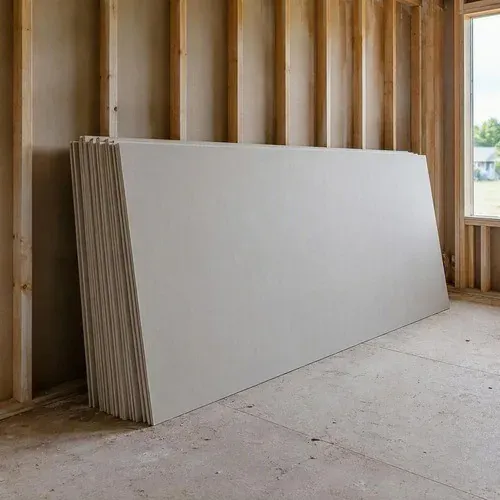
Board arrives and gets distributed through the space. We plan the layout to keep joints out of awkward spots and minimise waste. Half a day to a day.
Walls and ceilings hung, corner beads on, everything fastened to pattern. Two to five days for a typical house, one to two for a basement.
Every joint taped and embedded, screw heads covered. One to two days.
Wider knives, broader feathering, sanding between coats. Each coat needs roughly 24 hours to dry properly. Three to six days.
Work lights, last sanding pass, touch-ups. One day.
The drying time between coats is the thing that surprises people most. It cannot be rushed with a fan and a hopeful attitude. A coat closed up wet cracks later, and we would rather tell you that at the quote stage than explain it in a callback.
all board and materials, hanging, corner bead, taping, finishing to your chosen level, and cleanup of our work areas.
framing complete and inspected, electrical and plumbing rough-ins finished, HVAC installed, blocking in place for anything that will be mounted later, and heat in the space if we are working through a Niagara winter.
That last one is not a formality. Compound will not cure properly in an unheated space, and a January job in a cold house takes far longer or fails outright.
We are not a general renovation company fitting drywall in between kitchens and decks. This is the trade, and doing one thing for twenty years produces a different result than doing ten things adequately.
Enough houses in this region that very little surprises us anymore.
If something goes wrong on your property, you are not the one carrying it. Ask any contractor for proof of both before they start, including us.
Relevant the moment your project involves a vaulted ceiling, a stairwell or a two-storey open space.
Tell us what you are building and where you are in the process. We will come out, measure, and give you a written quote with the scope and the finish level clearly stated.
A few stages from recent work. Every job ends with a raking-light inspection before we call it finished.
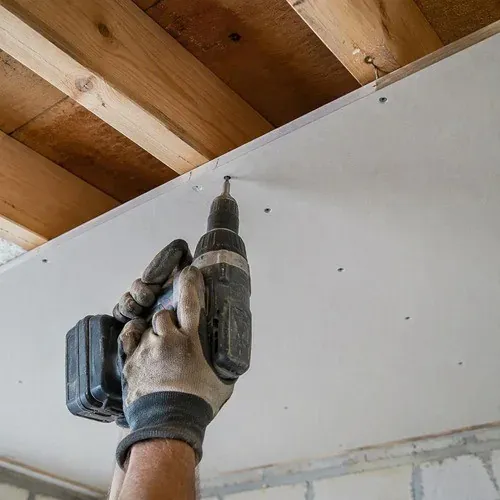
Two to three weeks for a typical Niagara home. Roughly a week of hanging, then one to two weeks of taping and finishing, because each coat needs a day to dry. A basement usually runs one to two weeks.
No. Most clients give us access and carry on with their week. We will need you reachable for decisions, and we prefer you walk the space with us before the final coat.
Yes, and it is normal. We coordinate with electricians, plumbers and HVAC crews regularly. Everything needs to be roughed in and inspected before we board, so the sequencing usually sorts itself out.
5/8" as standard. It resists sagging between joists over the years far better than 1/2", which is why the small extra material cost is worth it every time.
No. We hand over a properly finished, sanded, paint-ready surface. We are happy to recommend painters in the region who are used to working behind us.
Yes. Talk to us about the specific terms when we quote, and we will put them in writing.
Not for drywall on its own. The larger project it belongs to, such as a basement finish or an addition, will usually need one, and that permit covers the drywall stage.
Call us. Some hairline movement in a new build is normal as the house settles through its first heating season. A seam that opens properly is a workmanship issue and we come back and fix it.
Taping, mudding and sanding to Level 3, 4 or 5. The half of the job everyone can see once the paint is on.
Drywall Taping & Finishing ›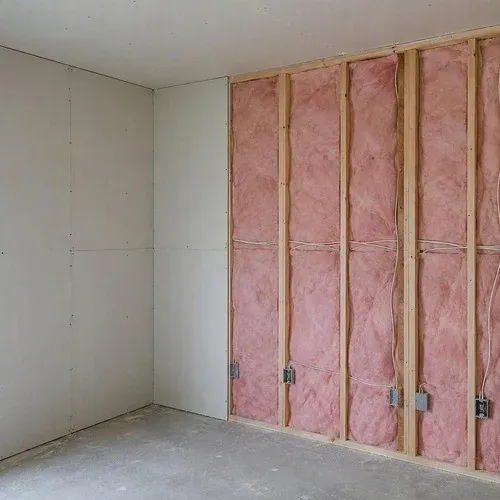
Batt and blown insulation with vapour barrier detailed properly before the board goes on and hides it for good.
Drywall Insulation ›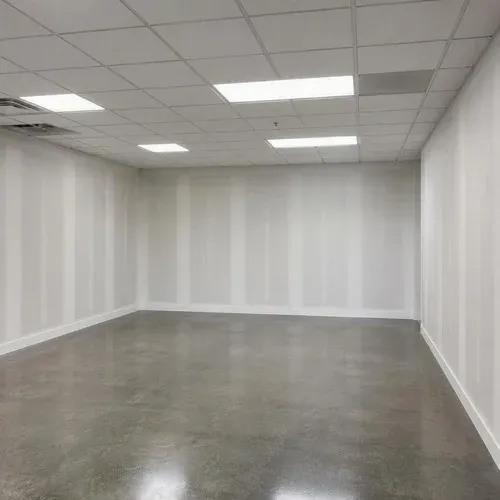
Steel stud partitions, retail and office fit-outs, fire-rated and acoustic assemblies, worked around your trades and your schedule.
Commercial Drywall Installation ›We cover every town in Niagara from our shop on Vine Street in St. Catharines. These are the areas where this service comes up most.
Tell us what you are dealing with and roughly where in Niagara you are. For repairs, a photo is usually enough for a number without a site visit.